

.webp)
Apollo Cloud Solutions Limited | Company number 09328921 | VAT Reg: GB422571123
Copyright © Apollo Cloud


Safeguarding in schools increasingly depends on how well communication systems support staff in critical moments. This article explains why modern telephone platforms must align with DfE guidance, how safeguarding can be built into everyday communications, and what “good” looks like in practice for UK schools.
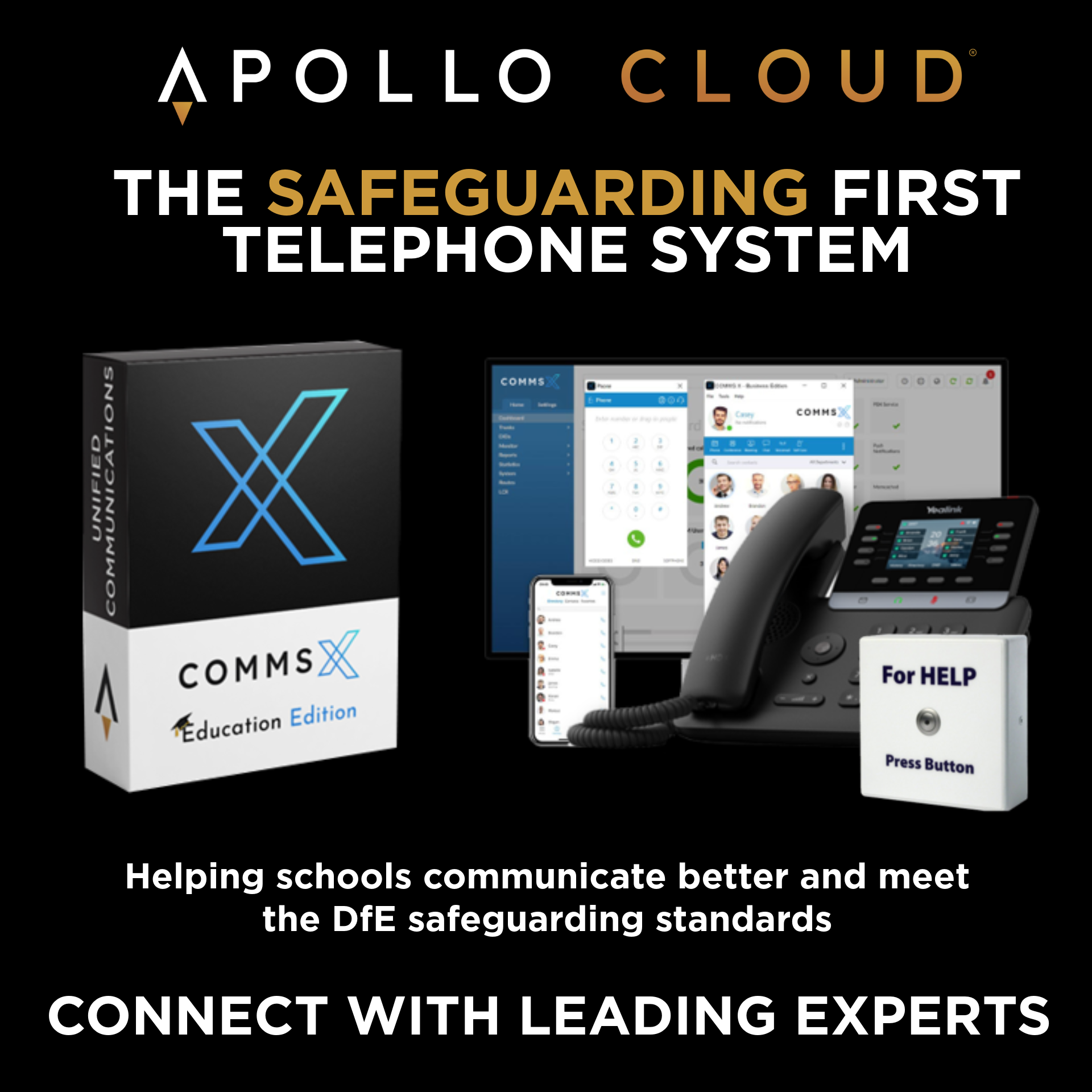
Safeguarding in UK schools is no longer confined to policies, training and pastoral processes. Increasingly, the Department for Education expects technology systems, including telephone and communications platforms, to actively support safeguarding outcomes.
Yet many schools still treat their phone system as basic infrastructure rather than a safeguarding asset.
At Apollo Cloud, we take a different view.
This article explains how modern school telephone systems can and should support safeguarding, how this aligns directly with DfE statutory guidance, and why Apollo Cloud’s Comms X Education Edition has been designed as a safeguarding-first communications platform.
Safeguarding and Communication: The DfE’s Direction of Travel
The Department for Education’s Keeping Children Safe in Education(KCSIE) statutory guidance makes one principle clear: safeguarding must be embedded across the whole school environment, not bolted on.
KCSIE places explicit expectations on schools to ensure:
What is often overlooked is that telephone system sits at the centre of all of these requirements.
Almost every safeguarding disclosure, emergency call, parent concern ,or incident escalation typically begins with a phone call.
Why Traditional School Phone Systems Fall Short
Many legacy or generic business phone systems were never designed for safeguarding use. Common risks we see in schools include:
From a safeguarding perspective, these gaps matter.
They introduce avoidable risk at exactly the moments when clarity, speed and accountability are critical.
The Safeguarding-First Telephone System: What “Good” Looks Like
Comms X Education Edition was created specifically to address these gaps and to align school communications with DfE safeguarding expectations
Rather than adapting a generic platform, safeguarding has been designed in from the outset.
Key safeguarding capabilities include:
These features are not optional extras or add-ons. They are included as standard to ensure schools are not forced to choose between cost and safeguarding outcomes
Direct Alignment with KCSIE Requirements
1. All Staff Responsibility (KCSIE Part 1)
Requirement: Every member of staff must be able to identify and report safeguarding concerns.
How Comms X Supports This:
Calls can be recorded, routed and escalated correctly, ensuring safeguarding concerns raised by phone are captured and not lost
2. Designated Safeguarding Leads (KCSIE Part 2)
Requirement: DSLs must coordinate safeguarding activity and maintain accurate records.
How Comms X Supports This:
Voicemail-to-email, call logs and recordings ensure DSLs have immediate access to evidence and messages, supporting timely decision-making and case management
3. Record Keeping and Evidence (KCSIE Part 5)
Requirement: Secure, accessible safeguarding records must be maintained.
How Comms X Supports This:
Auditable call histories and recordings provide a reliable evidence base for safeguarding reviews, multi-agency work and Ofsted inspections
4. Emergencies and Site Safety (KCSIE Annex B)
Requirement: Schools must be prepared for safeguarding emergencies.
How Comms X Supports This:
Broadcast alerts and lockdown capabilities allow immediate, controlled communication during critical incidents, missing pupil situations or site security threats
5. Protecting Staff as Well as Pupils
Safeguarding is not only about pupil safety. KCSIE also emphasises professional boundaries and staff protection.
A key risk we see is the continued use of personal mobile phones for safeguarding or parental communication.
Comms X Education Edition removes this risk by providing:
This protects staff privacy while ensuring the school retains oversight and safeguarding control
Why Apollo Cloud Is Different
Apollo Cloud is not simply a telecoms provider supplying phone systems to schools.
Our role is to translate safeguarding requirements into operationally effective communications design.
That means:
We understand how safeguarding is inspected, evidenced and lived day-to-day in schools. Our systems are designed accordingly.
Safeguarding Is Not a Feature. It Is a Design Principle.
Safeguarding failures rarely occur because staff do not care. They occur because systems do not support people under pressure.
A safeguarding-first telephone system ensures that when something goes wrong, the technology helps rather than hinders.
For schools reviewing their communications infrastructure, the question should no longer be “Does it make calls?”
It should be “Does it actively support our safeguarding responsibilities?”
That is the standard Apollo Cloud designs to.
Learn More
If you are reviewing your school’s telephone system as part of a safeguarding, Ofsted or digital strategy review, Apollo Cloud can help you assess whether your current platform genuinely supports DfE expectations.
Protect students. Support staff. Stay compliant.
Don't hesitate to say hi, we'd love to see how we can help.

